

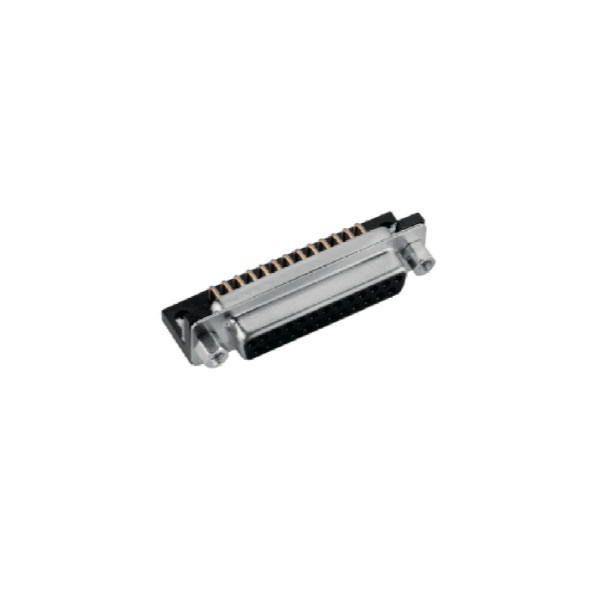
As a professional with years of experience in the D-Sub connector industry, I often get asked: "Do you carry high-density 26-pin D-subminiature connectors with locking mechanisms?" Today, I'll share detailed insights on this topic to help you find these specialized connectors without unnecessary hassle.
Why Choose 26-Pin D-Sub Connectors with Locking Mechanism?
Picture this: Your equipment is running a critical operation when suddenly the connection fails due to a loose connector—doesn't that make your blood pressure spike? This is exactly why more industrial applications are adopting locking mechanisms for High Power D-Sub Connectors.
Locking D-Sub Power Connectors are particularly suitable for:
-
Vibrational environments (industrial machinery, vehicle-mounted equipment)
-
Applications requiring frequent plugging/unplugging
-
Mission-critical systems demanding maximum connection reliability
Key Considerations for High-Density 26-Pin D-Sub Connectors
1. Locking Mechanism Types: Which One Fits Your Needs?
The market offers various locking mechanisms, primarily categorized as:
-
Screw locks: Most traditional and reliable, but slower to install
-
Push-pull locks: Convenient operation, ideal for space-constrained environments
-
Lever locks: Combine ease of use with secure fastening
"Which locking type is best?" That entirely depends on your specific application. Equipment needing frequent maintenance might prefer push-pull locks, while permanent installations may opt for screw locks.
2. Contact Materials and Plating: Critical for Signal Quality
Did you know? Even with identical 26-pin D-Sub male connectors, different contact platings can yield completely different performance. Common plating options include:
-
Gold plating: Best conductivity and corrosion resistance
-
Silver plating: High conductivity but prone to oxidation
-
Tin plating: Economical but shorter lifespan
For high-frequency signals or harsh environments, I strongly recommend gold-plated contacts—the higher initial cost often proves more economical long-term.
3. Housing Materials: More Than Just Appearance
When clients inquire about IP67 D-Subs, I first clarify whether they need metal or plastic housings:
-
Metal housings: Better EMI shielding and mechanical strength
-
Plastic housings: Lightweight, cost-effective for non-harsh environments
For outdoor or industrial settings, metal-housed waterproof D-sub connectors typically offer more reliable solutions.
Special Challenges of High-Density Designs
The female version of 26-pin D-Sub connectors presents more complex design challenges than standard DB9, DB15, or DB25 connectors. Tighter pin spacing means:
-
Higher precision requirements for mating
-
More specialized termination techniques
-
Stricter demands on insulation materials
"Is higher density always better?" Not necessarily! If your application doesn't require all those pins, standard-density DB25 might be more cost-effective.
Frequently Asked Questions
Q: How much vibration can locking D-Sub Power Connectors withstand?
A: This depends on the locking mechanism type and quality. Premium locking D-Subs can maintain stable connections for years in industrial vibration environments.
Q: What's the difference between 26-pin and 25-pin D-Subs? Why not standard DB25?
A: 26-pin designs typically accommodate special signal configurations, with the extra pin often dedicated to lock detection or power supply.
Q: Are there installation differences between IP67 D-Subs and standard D-Subs?
A: IP67-rated waterproof D-sub connectors require special attention to gasket installation—proper compression is essential for waterproof performance.
Q: Do locking mechanisms differ between D-Sub male and female connectors?
A: Locking mechanisms are typically designed into the housing, so mating styles are consistent, though specific implementations may vary slightly.
Practical Procurement Advice
-
Sample testing is non-negotiable
Regardless of supplier claims, always request samples to test locking mechanism durability, mating force, and contact stability. -
Certifications matter
While we can't discuss specific certifications, ensure products meet your industry's relevant standards. -
Cable compatibility is equally important
Even the best High Density D-Sub needs properly matched cables to perform—don't overlook cable specifications. -
Evaluate supplier technical support
Can your supplier provide expert assistance when technical questions arise? This often outweighs price differences.
Final Thoughts
Selecting the right high-density 26-pin D-subminiature connector with locking mechanism might seem trivial, but it can significantly impact your system's reliability. In my professional experience, I've seen numerous cases where "saving pennies" ultimately "cost pounds."
Remember: The best connectors are those you "install and forget"—they work silently without causing trouble. I hope this guide helps you find such a solution.
If you have further questions about D-Sub Power Connectors or need application-specific advice, feel free to reach out. After all, in our industry, proper connections make all the difference!