

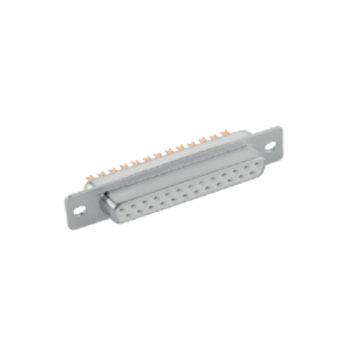
What’s out there really is the difference between DB25 and DB37? Which one do I choose for my equipment? Today I’ll go over everything you need to know about these two D-Sub types in simple terms.
Meet the Members of the D-Sub Family which are of Primary Importance.
First up we see that DB25 and DB37 which are a part of the D-Sub connector family named for their D shaped metal shield. Also did you know that this design at the time was meant to prevent improper connection? Today it has become an industry interface symbol.
DB25, as the name goes, has 25 pins. DB37 is of a larger size which has 37 pins. But do those be the only differences? Far from it! I will go into the details.
Pin Arrangement and Physical Size Differences
The which is the greatest to see between DB25 and DB37 connectors is size. DB37 is out to be wider than DB25 which also notes.
DB25: Approx. 31.5mm shell width which has 13 pins in one row and 12 in the other.
DB37: Approximately a width of 46.96mm which has three sets of pins (two sets of 19 and one of 18).
Wait, we have three pin rows? That is put off a lot of people. Well I hear that up a lot. But what we find is the multi row design enables high density wiring which is very valuable in industrial automation.
Electrical Characteristics and Signal Capacity
Some pins are better than others.
In standard configurations: In most cases:.
DB25 also has 8 to 12 signal pins with the rest for ground or reserve.
DB37 has a configuration of up to 22 signal pins which in turn greatly increases interface versatility.
What about power transmission? you may ask. Some High Power D-Sub Connector variations are able to put out greater current through certain pin pairs, but this is a special design feature not all DB25/DB37 connectors include this.
Industrial Applications Showdown
Now for the most practical part: When do you use DB25 as opposed to DB37?
Typical DB25 Applications
Serial communication: While still today’s dominant interface, RS-232 which includes the DB25 variant is very much used in industry.
Printer connections: Older parallel printer interfaces (which are becoming less common).
Industrial control: Programming interfaces to some PLCs.
Audio equipment: Pro audio I/O systems.
Common DB37 Uses
SCSI interfaces: Connections of the older storage devices.
Military/avionics: Applications for high volume signal transmission.
Industrial automation: Multi input in complex control systems.
Medical equipment: Interfaces of certain medical imaging devices.
In those which my equipment is used in tough environments what do I do? For that which you require try out the IP67 D-Sub or the Waterproof D-Sub connectors which have special sealing designs (dust and water proof).
Frequently Asked Questions
Q: Are DB25 and DB37 compatible?
A: Surely not! The physical dimensions and pin arrangements are different. You risk damage to the connectors if you force a connection. Also D-Sub male connectors and D-Sub female connectors have to be the same type.
Q: How do I prevent D-Sub connector from coming loose in industry?
A: Quality D-Sub power connectors that have screw locking mechanisms which in some better models also include a secondary lock to prevent disconnection in high vibration environments.
Q: Which one should I choose between DB9, DB15, DB25, and DB37?
A: It depends on your needs. DB9 is for simple serial communication, DB15 is found in game ports and some video interfaces, DB25 is for moderate complexity, and DB37 is for high density connections.
Q: Some D-Sub connectors have higher prices.
A: Industrial grade D-Sub connectors can also feature special materials for the most part for example high temperature plastic or gold plated contacts, have IP ratings and go through very tough certification which all play into the higher cost. In fact in a lot of critical applications it is reliability that out weighs issues of price.
Selection and Usage Recommendations
After all that back and forth, I assume you have a better grasp of DB25 and DB37. But when you go to buy, here are a few things to remember:.
Environmental factors: For wet or soapy settings, always go for the IP67 D-Sub or waterproof options.
Current requirements: For high power transmission look to Power D-Sub which is designed specifically for that.
Durability: For often used connections and disconnections, select models that have reinforced shells and high quality contacts.
Cable management: In dense connections, see to it that you use designs which include rear shell cable anchoring.
How do I make sure I get a quality product? I would look at the manufacturer’s background in terms of production and also their product test reports which may be available to the public. Also by the time you identify a defective product the damage may be done to your full system which may end up being a more expensive issue!
Final Thoughts
DB25 and DB37 being key players in the D-Subminiature Connector family each have separate uses which present special benefits. By which you are able to make better decisions for your industrial equipment connection needs.
In that which goes for DB25 and DB37 quality is of the essence. A well built D-Sub connector should stand the test of time and perform dependably in a variety of tough environments. In industry reliability is not a nice to have it is a must.
Sure if you have more questions on D-Sub connectors or are looking for solutions to your specific applications do get in touch. We at this company are into the development and manufacturing of many types of D-Sub connectors which we have been doing for a while now in the industry and we are glad to share our knowledge to solve your connectivity issues.