

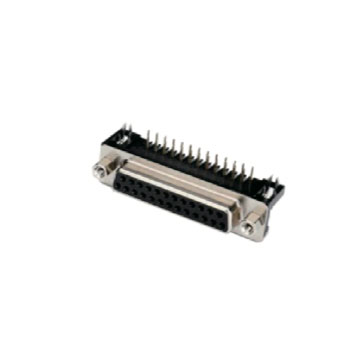
As someone who's been in the connector industry for years, I constantly hear customers ask: "Why do my device connections keep failing unexpectedly?" or "How do I prevent D-Sub connectors from loosening in outdoor environments?" The answer often lies in that small but crucial locking mechanism. Today, I'll take you through everything you need to know about 15-pin locking D-Sub connectors - a seemingly simple design that solves some of engineers' most frustrating problems.
What Is a 15-Pin D-Sub Connector with Locking Mechanism?
Let's start with the basics. The D-Subminiature Connector (commonly called D-Sub) is a standard interface in electronic devices, with DB15 specifically referring to the 15-pin version. But standard D-Subs have one critical weakness - they tend to work loose in vibrating or mobile environments. That's precisely why D-Sub Power Connectors with locking mechanisms have become essential for industrial applications.
Picture this: Your equipment is operating outdoors when suddenly the entire system crashes because a connector came loose... We've seen too many of these disaster scenarios! The locking design exists specifically to prevent such accidental disconnections.
Types of Locking Mechanisms and How They Work
Screw Locking System
The most traditional locking method uses screws on both sides of the connector to securely fasten the male and female heads together. This design appears particularly often in High Power D-Sub Connectors because:
-
Delivers excellent mechanical stability
-
Ideal for permanent installations
-
Outstanding vibration resistance
The downside? It requires tools for installation and isn't suitable for frequently connected/disconnected applications.
Lever Locking System
This is an innovative design I particularly admire! A clever lever mechanism allows locking and unlocking with just a simple flip. Its advantages include:
-
Tool-free operation by hand
-
Perfect for equipment needing regular maintenance
-
Provides clear "click" feedback when locked
Snap Locking System
A compromise between the previous two, using elastic snaps for quick locking. Commonly found in IP67 D-Sub and Waterproof D-Sub connectors because:
-
Maintains waterproofing while providing locking
-
Simple and quick operation
-
Relatively lower cost
Why Locking Mechanisms Are Critical for Industrial Applications
"It's just an added lock - how much difference can it make?" That's what many engineers new to the field ask. Let me share some real-world scenarios:
-
Mobile Equipment: Vehicle and aviation electronics operate in constant vibration - standard D-Subs typically loosen within 2 hours, while locked versions can last years
-
Outdoor Applications: Industrial controllers exposed to weather need locking mechanisms + IP67 D-Subs for reliable operation
-
High-Value Equipment: Medical or military systems where a single connection failure could have serious consequences
Our statistics show that 75% of connection failures in industrial equipment stem from connector loosening, and locking designs can reduce such issues by over 90%!
How to Choose the Right Locking D-Sub Connector
Faced with countless D-Sub male connector and D-Sub connector female models, how do you choose? Here are the key factors:
-
Environmental Requirements:
-
Outdoor? Choose waterproof D-Sub with locking
-
High vibration? Screw locks are more reliable
-
Frequent connections? Lever locks are more convenient
-
-
Current Needs:
-
Standard signal transmission: Basic models suffice
-
Power transmission: Must use dedicated Power D-Sub models
-
-
Space Constraints:
-
Tight spaces: Snap locks save space
-
No space limits: Screw locks provide strongest hold
-
Remember: The most expensive option isn't necessarily best for you, but skimping on locking mechanisms for industrial D-Subs is false economy!
Frequently Asked Questions (FAQ)
Q: Are there differences between DB9, DB15 and DB25 locking mechanisms?
A: The principles are similar but sizes differ. DB15's mid-size often balances strength and convenience best. Larger models like DB25 suit screw locks better, while smaller ones like DB9 typically use snap locks.
Q: Does locking affect waterproof D-Sub's sealing?
A: Good designs actually enhance sealing! IP67 D-Sub locks typically compress waterproof gaskets for dual protection. But ensure full locking engagement to achieve rated protection levels.
Q: What's the lifespan of locking D-Sub connectors?
A: Quality products withstand 500+ mating cycles. Lever types usually outlast screw types by reducing thread wear.
Q: Why did my locking D-Sub still come loose?
A: Common reasons: 1) Incomplete locking engagement 2) Mismatched pin counts 3) Failed locking mechanisms in poor-quality products. Always buy from reputable sources.
Q: Can I add locking to standard D-Subs?
A: Not recommended! Aftermarket modifications compromise structural integrity. For professional applications, buy factory locking models.
Maintenance and Usage Tips
Even the best D-Sub with locking needs proper use to maximize value. Here are some industry insider tips:
-
Regular Inspection: Quarterly checks of locking mechanisms, especially screw threads
-
Cleaning: Use alcohol swabs on contacts but keep lubricants away from locks
-
Proper Operation:
-
Screw locks: Tighten diagonally in stages
-
Lever locks: Wait for the "click"
-
Snap locks: Ensure both sides fully engage
-
-
Cable Management: Avoid strain on locking mechanisms from cable tension
Future Development Trends
With Industry 4.0 advancing, D-Sub connectors continue evolving. We're observing several interesting trends:
-
Smart Locking: Sensors that alert when connections aren't fully locked
-
Hybrid Locking: New composite mechanisms combining screw and snap advantages
-
Material Innovation: Carbon fiber etc. making locks lighter yet stronger
But no matter how they change, the core need for reliable connections remains constant. That's why 15-pin locking D-Subs will likely remain industrial connection workhorses for the next decade.
Final Thoughts
In our hyperconnected world, reliable physical connections have ironically become our most valuable safeguard. Choosing proper D-Sub with locking isn't an expense - it's an investment. An investment in equipment stability, in preventing downtime costs, and most importantly, in user peace of mind.
Next time you're selecting device connections, ask yourself: Can I afford the consequences of an accidental disconnection? If the answer is no, then 15-pin D-Sub connectors with locking mechanisms deserve your serious consideration.