

Hey there! I work with D-Sub connectors every day and get all kinds of questions about them. Today, let’s talk about something super practical: Should you solder or crimp your D-Sub connector? Which method is more reliable? Don’t worry—I’ll break it down for you in plain, simple language.
First, why does this topic even matter?
Ever had your device suddenly power down, signal drop, or just act up out of nowhere? A lot of the time, the issue traces back to the connector—especially those seemingly small but critical D-Sub interfaces. Soldering and crimping are the two most common ways to terminate them, but the difference between the two isn’t small.
Choose the wrong method, and you might end up with signal issues—or even a full system failure. Sounds important, right?
Soldering: Old-School, Reliable… But Skill-Dependent
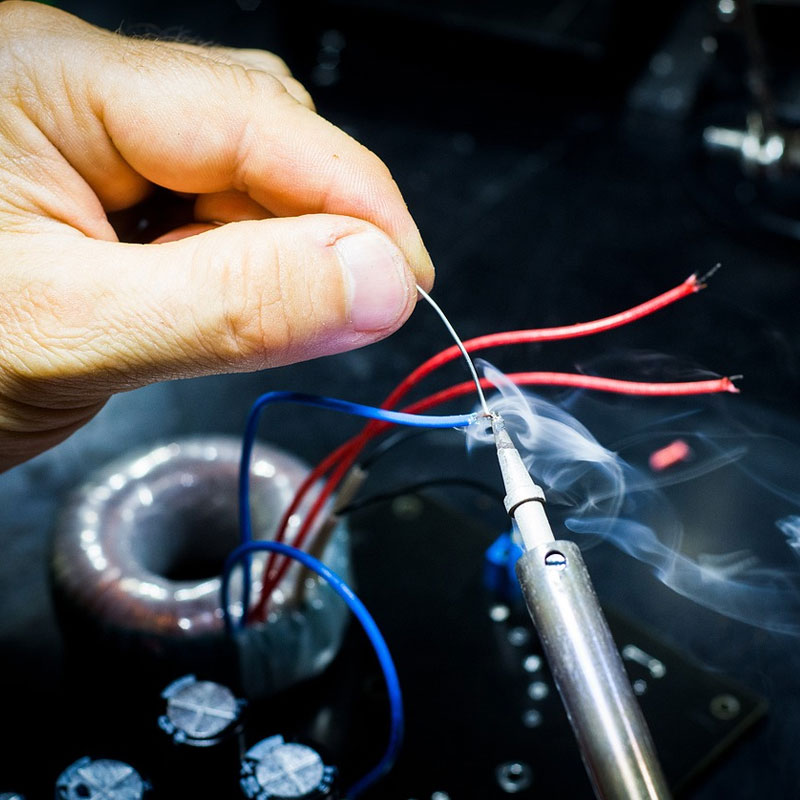
Soldering is like using glue to permanently bond wires together. It’s been around forever, and it’s a proven method. But here’s the catch—it really depends on the skill of the person doing it.
The good stuff about soldering:
-
Strong connection: Once soldered properly, it’s not going anywhere unless you force it.
-
Great conductivity: Solder is metallic, so signal loss is low. Perfect for high-frequency applications.
-
Works with everything: Whether it’s DB9, DB15, or DB25, soldering can handle it.
The not-so-good:
-
Heat damage risk: If you overheat it, you can melt the insulation inside the connector.
-
Skill needed: Not everyone can solder well. Cold joints, dry joints—it happens.
-
Not great under vibration: Solder is stiff. Constant shaking can lead to fatigue cracks.
So let me ask you: If your equipment operates in tough environments—like industrial machines or vehicle systems—is soldering really the best way to go?
Crimping: Modern, Fast… But Not Always “Solid”
Crimping is more like using a tool to squeeze the wire and terminal together. It’s fast and ideal for mass production, but it hugely depends on using the right terminals and tools.
Why people like crimping:
-
Speed: A crimp takes seconds. Perfect for automation.
-
No heat involved: Zero risk of thermal damage to the connector.
-
Consistent results: With the right tool, every crimp comes out the same.
Where it falls short:
-
You need the right tool: If your crimper isn’t matched to the terminal, the connection may be weak.
-
Lower pull strength: Crimped connections can loosen under mechanical stress.
-
Contact resistance may be higher: A bad crimp means higher resistance and poorer signal quality.
See what I mean? If you’re working with IP67 waterproof D-Sub or high-power D-Sub connectors, can crimping really stand the test of time and harsh conditions?
So which one is actually more reliable?
Truth is, there’s no one-size-fits-all answer—it depends on your application!
-
If you need maximum signal integrity and a permanent install—like in medical devices or precision instruments—soldering is probably better.
-
If you’re doing high-volume production and vibration isn’t a big issue—think consumer electronics—crimping could be the way to go.
-
For waterproof D-Sub connectors (like IP67 types), soldering is often preferred because solder joints work better with sealing processes.
But here’s a reminder: No matter which method you choose, quality of work is everything. Even if you pick the “best” method, poor execution means poor performance.
Q&A – Your Questions Answered
Q1: Does soldering D-Sub connectors often lead to cold joints?
It can—if the temperature is too low or the solder is low quality. Process control is key.
Q2: Can crimping be used for high-current Power D-Sub applications?
Yes, but you must use terminals and tools designed for it. Otherwise, higher resistance causes overheating.
Q3: Which is better in high-vibration environments: soldering or crimping?
Soldering usually offers more reliability—if the joint is well-made. Crimping may need strain relief.
Q4: For waterproof D-Sub connectors, is soldering or crimping recommended?
Soldering is more common—it’s easier to seal properly and meet IP67 requirements.
Q5: Are there differences between DB9, DB15, and DB25 when it comes to termination?
Not really—but more pins make soldering trickier. That’s where crimping’s consistency helps.
Wrapping Up
I really enjoy diving into details like these. D-Sub connectors might look simple, but there’s a lot going on. Neither soldering nor crimping is inherently better—it’s all about what works for you.
If you’re still unsure which method to use, or want to learn more about D-Sub male connectors, D-Sub female connectors, high-power versions, or even waterproof models, I’m here to help. Let’s talk!
Remember: Reliability isn’t guessed—it’s built through design and process.