

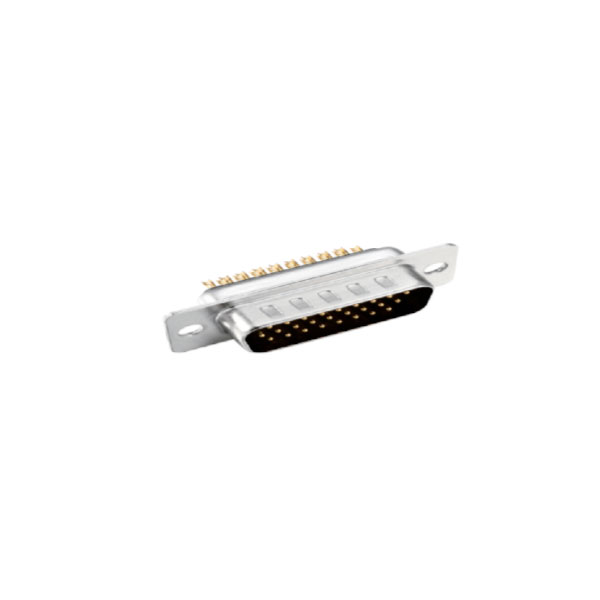
Having worked in the electronic connector industry for many years, I'm often asked by customers: "Should I choose gold-plated or tin-plated contacts for D-Sub connectors?" To be honest, while this question seems simple, it actually involves multiple considerations including cost, performance, and application environment. Today, I'll dive deep into this topic to help you find the most suitable choice.
Why Are Contact Platings So Important for D-Sub Connectors?
Imagine your carefully designed electronic equipment frequently malfunctioning due to poor connector contact - how frustrating would that be! The plating on D-Sub connector contacts is like the "handshake" of your equipment, determining the reliability and durability of signal transmission. The quality of plating directly affects the connector's conductivity, oxidation resistance, and service life.
Did you know? In harsh environments, connectors with poor-quality plating can see their contact resistance increase several times within just a few months, leading to signal attenuation or even complete interruption. That's why we can't overlook this seemingly minor technical detail.
Gold-Plated Contacts: The Gold Standard for High-End Applications
When it comes to gold-plated contacts, many people's first reaction is "expensive." It's true that gold comes at a price, but why do high-end applications still insist on using it?
Three Major Advantages of Gold-Plated Contacts
-
Excellent conductivity: Gold's electrical conductivity is second only to silver and copper, and it doesn't oxidize. This means contact resistance remains stable even after years of use. For applications transmitting weak signals, such as medical equipment or precision instruments, this is absolutely critical.
-
Superior corrosion resistance: I've seen equipment used at sea where tin-plated contacts rusted beyond recognition in just a few months, while gold-plated contacts remained unaffected for years. If your equipment operates in humid, dusty, or corrosive gas environments, gold plating is definitely the smart choice.
-
Extended mating cycles: Gold plating has moderate hardness - wear-resistant yet not so hard as to damage mating connectors. Standard gold-plated D-Sub connectors can typically withstand 500-1000 insertion/extraction cycles without significant degradation, making them ideal for equipment requiring frequent connections.
Ideal Applications for Gold-Plated Contacts
-
High-frequency signal transmission (e.g., video signals, RF signals)
-
Low-current/voltage signal transmission (e.g., sensor signals)
-
Harsh environments (high humidity, salt spray, industrial settings)
-
Applications requiring frequent mating
-
Mission-critical equipment demanding high reliability
Tin-Plated Contacts: The Economical Choice for Mass Applications
Not all applications need the "luxury" of gold plating. Tin-plated contacts dominate much of the market with their affordable pricing. But does cheaper necessarily mean lower quality? Absolutely not!
Three Key Benefits of Tin-Plated Contacts
-
Significant cost advantage: Tin is far cheaper than gold, making tin-plated D-Sub connectors the preferred choice for budget-sensitive projects. This is especially true for applications requiring large quantities of connectors, where choosing tin plating can save substantial costs.
-
Good initial performance: New tin-plated connectors actually offer quite good conductivity, with contact resistance differences from gold-plated versions being nearly imperceptible in everyday applications. For ordinary office equipment or household appliances, they're perfectly adequate.
-
Easy soldering: Tin itself is a common soldering material, making tin-plated contacts more convenient for manual repairs or modifications. I've known many engineers who particularly prefer tin-plated terminals precisely because they don't require special treatment during soldering.
Ideal Applications for Tin-Plated Contacts
-
General commercial electronic products
-
Indoor equipment in controlled environments
-
Disposable or short-term use equipment
-
High-volume, cost-sensitive production
-
Applications not requiring frequent mating
Key Performance Comparison: Let the Data Speak
Let's use some actual test data to directly compare the two plating types:
| Performance Metric | Gold-Plated | Tin-Plated |
|---|---|---|
| Initial Contact Resistance | <10mΩ | <15mΩ |
| Resistance Change After 100 Cycles | +5% | +20% |
| Salt Spray Test (96 hours) | No visible corrosion | Slight oxidation |
| Typical Mating Cycles | 500-1000 | 100-300 |
| Operating Temperature Range | -65°C~+125°C | -40°C~+105°C |
Seeing this data, you can understand why some applications must use gold plating while others can get by perfectly well with tin plating.
The Art of Balancing Cost and Performance
As an industry insider, I must emphasize: there's no absolute good or bad, only what's appropriate. Choosing plating is like buying clothes - you can't just look at price or quality alone, but must consider the usage scenario and actual needs.
When Should You Choose Gold Plating?
-
When equipment failure could have serious consequences (e.g., medical, aviation)
-
High-frequency applications where signal integrity is critical
-
Long-term use in harsh environments
-
Interfaces requiring frequent mating
-
Equipment with expected service life exceeding 5 years
When Is Tin Plating More Economical?
-
Consumer electronics
-
Indoor office equipment
-
Short-term use or rapidly updated equipment
-
Strictly budget-limited projects
-
Connectors with higher contact force (softer tin allows greater contact area)
I've seen too many clients initially choose tin plating to save money, only to have connectors fail frequently after deployment, eventually having to replace them all with gold-plated versions at greater expense. I've also seen projects blindly use gold plating, resulting in prohibitively high costs that made their products uncompetitive.
Frequently Asked Questions
Q: Is thicker gold plating always better?
A: Not necessarily! Excessively thick gold layers can actually wear more easily. Typically, 0.5-1.27μm of gold plating suffices for most applications. Special high-frequency applications might require over 2.54μm, but this significantly increases cost.
Q: Are there options between gold and tin plating?
A: Yes! Silver plating offers better conductivity but is prone to sulfidation; nickel underplating improves corrosion resistance; some manufacturers offer selective gold plating (only on critical areas). However, each option has pros and cons requiring case-by-case evaluation.
Q: How can I tell if existing connector plating has failed?
A: Contact resistance testing is the most direct method, while visual inspection can reveal obvious oxidation or wear. For critical equipment, I recommend regular testing - preventive maintenance is far more economical than post-failure repairs.
Q: Why are some tin-plated connectors more expensive than gold-plated ones?
A: Connector pricing depends on more than just plating - housing materials, manufacturing processes, etc. A high-quality tin-plated D-Sub might cost more than a low-end gold-plated product, though this is relatively uncommon.
Q: Can I gold-plate contacts myself?
A: Strongly discouraged! Professional plating requires strict process control. DIY plating often results in uneven coverage and poor adhesion, actually harming performance. Rather than risk it, purchase properly gold-plated connectors.
Five Key Considerations When Choosing Plating
-
Signal type: Prioritize gold for high-frequency or weak signals; tin usually suffices for ordinary power and digital signals.
-
Environmental conditions: Evaluate temperature, humidity, corrosive gases - harsh environments favor gold.
-
Mating frequency: Frequent connections accelerate plating wear - high-cycle applications need gold.
-
Expected lifespan: Gold's long-term stability shines in equipment meant to last.
-
Budget constraints: Find the sweet spot between performance and cost - avoid both over-engineering and false economy.
Final Thoughts: Industry Insights from Experience
The longer I'm in this industry, the more I understand one truth: there are no standard answers in technical choices, only the most suitable solutions. Whenever clients consult me about gold versus tin plating, I make sure to understand their specific application scenarios, budget constraints, and long-term plans before offering tailored advice.
Remember, while connectors may be small components, they're crucial to equipment reliability. Rather than fixing problems later, make wise decisions during selection. I hope this article helps clarify your thinking to find that perfect balance. If you still have questions, I'm happy to continue the discussion - after all, this is my specialty!