

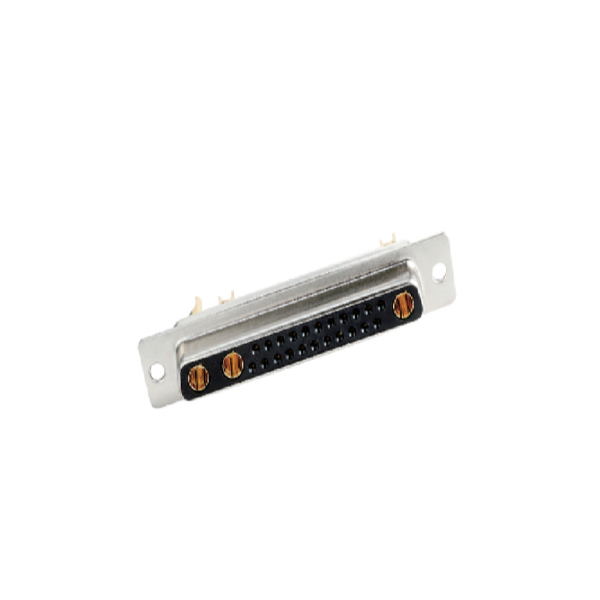
Hey there! If you're looking for the ultimate guide to military-grade D-Sub connectors, you've come to the right place. As an expert in this field, I'm going to share some truly valuable insights with you—not the generic information you can find anywhere, but the real knowledge that explains why military-grade D-Sub connectors are so reliable in harsh environments.
What Are Military-Grade D-Sub Connectors?
First, let's address a basic question: What exactly is a military-grade D-Sub connector? Simply put, it's not your everyday connector found in consumer electronics. Imagine your equipment needing to maintain stable signal transmission in extreme temperatures, severe vibrations, or even underwater conditions. That's where military-grade D-Sub connectors come into play!
Military standards (such as MIL-DTL-24308) impose nearly苛刻 requirements on these connectors' materials, construction, and performance. We're talking about gold-plated contacts, special alloy shells, and IP67-rated waterproofing—features that make them indispensable in aerospace, military equipment, industrial automation, and other demanding fields.
Why Are Military Standards So Important?
Have you ever wondered why standard D-Subminiature connectors perform well in the lab but fail in the field? The answer lies in the standards!
Military standards aren't arbitrary; they're developed through rigorous testing and real-world validation. For example:
-
Corrosion resistance: Can operate normally after 48+ hours of salt spray testing
-
Mechanical strength: Withstands repeated mating cycles and intense vibrations
-
Temperature range: Stable operation from -55°C to +125°C
When you see a D-Sub Power Connector with MIL certification, you're not just buying a product—you're buying "reliability assurance."
Key Features of Military D-Sub Connectors
1. Material Selection: It's Not Just About Metal
What materials go into a military-grade High Power D-Sub Connector? We're talking about:
-
Contacts: Gold-plated (not just a thin layer, but substantial thickness)
-
Shells: Aluminum alloy or stainless steel with special treatments
-
Insulators: Engineering plastics that withstand high temperatures
2. Waterproof Performance: What Does IP67 D-Sub Really Mean?
The term "waterproof" gets thrown around too casually. A true Waterproof D-Sub Connector meets IP67 standards—meaning it's completely dustproof and can withstand immersion in 1 meter of water for 30 minutes without damage. Imagine your equipment operating in heavy rain or damp basements—isn't this level of protection crucial?
3. Connection Stability: It's Not Just About Plugging In
What's the military environment's worst nightmare? Signal interruption! Quality D-Sub male connectors and D-Sub connector female counterparts must ensure:
-
Extremely low and stable contact resistance
-
Optimal mating force—not too loose to cause accidental disconnection, not too tight to operate
-
Self-cleaning contact designs to minimize oxidation
Common Application Scenarios
"Does my equipment really need military-grade D-Sub?"—That depends on your application. Let's look at scenarios where they're absolutely essential:
-
Aerospace: There are no repair shops mid-flight; every connection must be fail-safe
-
Military Equipment: From deserts to polar regions, gear must withstand extreme conditions
-
Industrial Automation: Factory environments with constant vibration, oil, and EMI
-
Marine Equipment: Salt spray is electronics' natural enemy
-
Medical Devices: Life-support systems can't tolerate connection failures
DB9, DB15, DB25—How to Choose the Right Model?
Confused by these numbers? Don't worry—it's simpler than you think:
-
DB9: Most common serial communication interface, compact but versatile
-
DB15: Often used for VGA and specialized control equipment
-
DB25: Parallel ports, now primarily for industrial controls
The key isn't the number size, but your actual needs—how many pins? What signals? Current requirements?
Frequently Asked Questions
Q: What's the main difference between military-grade and commercial D-Sub connectors?
A: The primary differences are materials and testing standards. Military-grade uses higher-quality materials and undergoes stricter environmental testing to ensure reliability under extreme conditions.
Q: How can I verify if a D-Sub Power Connector truly meets military standards?
A: The most reliable method is checking for official MIL certification. Genuine military-grade connectors will also have detailed technical documentation supporting their specifications.
Q: Can IP67 waterproof and dustproof D-Sub connectors be used underwater?
A: IP67 certification means short-term immersion (1 meter for 30 minutes), but they're not designed for prolonged underwater use. Specialized waterproof connectors are needed for permanent submersion.
Q: Why are some D-Sub connectors significantly more expensive?
A: Military-grade connectors cost more due to three factors: special materials, stringent manufacturing processes, and comprehensive testing/certification. You're paying for guaranteed reliability.
Q: Are gold-plated contacts really necessary in D-Subs?
A: If you need long-term stable signal transmission—especially in harsh environments—gold plating is essential. It prevents oxidation and maintains low contact resistance.
Key Considerations When Selecting Military D-Sub Connectors
Now you might wonder: "With so many options available, how do I choose?" Here's my professional advice:
-
Define Requirements: Clearly identify your operating environment and technical needs
-
Verify Certifications: Look for MIL-DTL-24308 and other military standards
-
Supplier Qualifications: Choose manufacturers with military supply experience
-
Sample Testing: Test samples in simulated real-world conditions
-
Long-Term Support: Ensure suppliers offer ongoing technical support
Remember, purchasing military-grade D-Sub connectors isn't a one-time transaction—it's establishing a long-term partnership. When your equipment needs reliable connectivity at critical moments, you'll be glad you chose the right partner.
Final Thoughts
Military-grade D-Sub connectors might not be the flashiest technology, but they're the unsung heroes of modern electronic systems. From fighter jets to deep-sea explorers, industrial robots to emergency medical devices, these small connectors carry enormous responsibilities.
If you're searching for reliable D-Sub solutions for critical applications or have questions about military connector standards, I'm happy to share more expertise. After all, in this field, having the right information can mean the difference between success and failure.
So, what level of D-Sub connector does your application require? It's time to give it serious thought!