

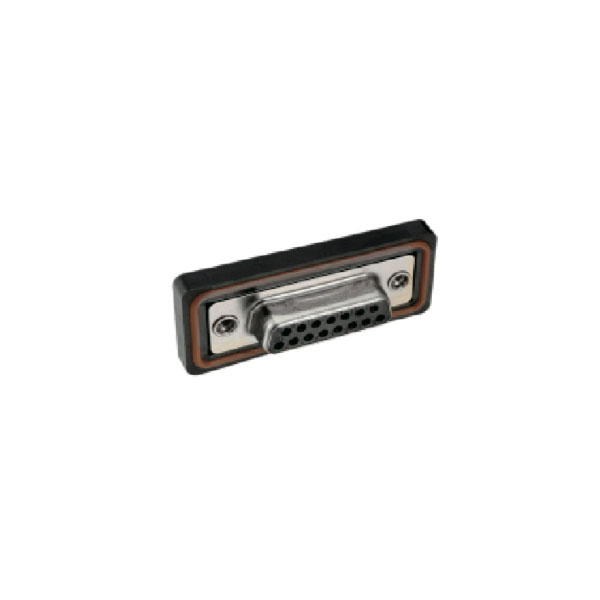
As a manufacturer specializing in D-Sub connectors, I often get asked: *"Can your IP67 waterproof D-Sub connectors really perform reliably in extreme conditions?"* The truth is, there’s no one-size-fits-all answer—different applications demand different levels of water resistance, dust protection, and corrosion resistance. Today, I’ll break down how to pick the right waterproof D-Sub connector for tough environments.
1. Why Does IP67 Rating Matter for D-Sub Connectors?
Imagine your equipment operates in damp, dusty, or even underwater conditions. Standard D-Sub connectors might quickly suffer from poor contact, oxidation, or short circuits. But an IP67-rated D-Sub can withstand immersion in 1 meter of water for 30 minutes while keeping dust out completely.
-
Industrial Automation – Factories with oil, grease, and dust require rugged connectors.
-
Outdoor Equipment – Traffic signals, wind turbines, and marine electronics face rain, salt spray, and corrosion.
-
Military & Aerospace – Extreme temperatures and humidity demand fail-proof connections.
If your application falls into any of these categories, IP67 D-Sub connectors are a must.
2. Key Factors When Choosing a Waterproof D-Sub Connector
(1) Housing Material: Metal or Plastic?
Many assume metal housings are always more durable, but in corrosive environments, high-grade plastics (like PBT) can outperform metal. For high-vibration settings, a metal-shell D-Sub power connector may offer better impact resistance.
Q: Are metal-shell waterproof D-Sub connectors heavier?
A: Yes, they’re sturdier but add weight. If your device is weight-sensitive, consider high-strength engineering plastic instead.
(2) Sealing Method: O-Ring or Potting?
-
O-Ring Seals – Best for removable applications (e.g., DB9, DB15, DB25 ports needing frequent plugging/unplugging).
-
Potting (Epoxy Sealing) – Fully waterproof but permanent—ideal for fixed installations.
Q: Do O-rings degrade over time?
A: Yes, especially under UV exposure or high heat. Opt for silicone O-rings for longer lifespan.
(3) Plating: Gold or Tin?
In humid or salty conditions, gold-plated D-Sub connectors resist oxidation better, ensuring stable signal transmission. Tin plating works for general industrial use if budget is tight.
Q: Why are high-power D-Sub connectors usually gold-plated?
A: Gold lowers contact resistance, reducing heat buildup—critical for high-power D-Sub connectors.
(4) Cable Compatibility: Standard or Waterproof?
Even if the connector is waterproof, non-waterproof cables can let moisture in. Always pair with waterproof cables and ensure proper sealing at terminations.
3. Common Mistakes: Waterproof Isn’t the Only Factor
Many focus solely on IP67 rating but overlook:
-
Temperature Resistance – Some environments exceed 100°C; standard plastic may warp.
-
Vibration Resistance – Automotive or robotics need connectors that endure constant shaking.
-
EMI Shielding – In high-interference settings, shielded D-Subminiature connectors are essential.
Q: Can IP67 waterproof D-Sub connectors be used in vehicles?
A: Yes, but they must meet automotive-grade vibration and temperature specs—industrial-grade may not suffice.
4. How to Test a Waterproof D-Sub Connector’s Reliability?
While we can’t share specific test data, you can verify performance with:
-
Immersion Test – Submerge the connector for 30 minutes; check for internal moisture.
-
Salt Spray Test – Simulate marine conditions; inspect plating for corrosion.
-
Durability Test – Perform 500+ insertion/removal cycles; check contact stability.
5. Don’t Forget These Details!
-
D-Sub male connectors and D-Sub female connectors may have different sealing designs—ensure compatibility.
-
For frequent plugging/unplugging, choose locking waterproof D-Subs to prevent accidental disconnection.
-
Custom needs? Special pin counts, high-current ratings? Discuss with your supplier early.
Final Thoughts: The Right D-Sub Keeps Your System Running
In harsh environments, a low-quality connector can cripple your entire system. Don’t just focus on price—ensure your IP67 waterproof D-Sub connector truly matches your needs. Still unsure which one fits? Tell us your application, and we’ll help you find the best solution!
What environment does your equipment face? Ever had a D-Sub connector fail? Share your experience below!