

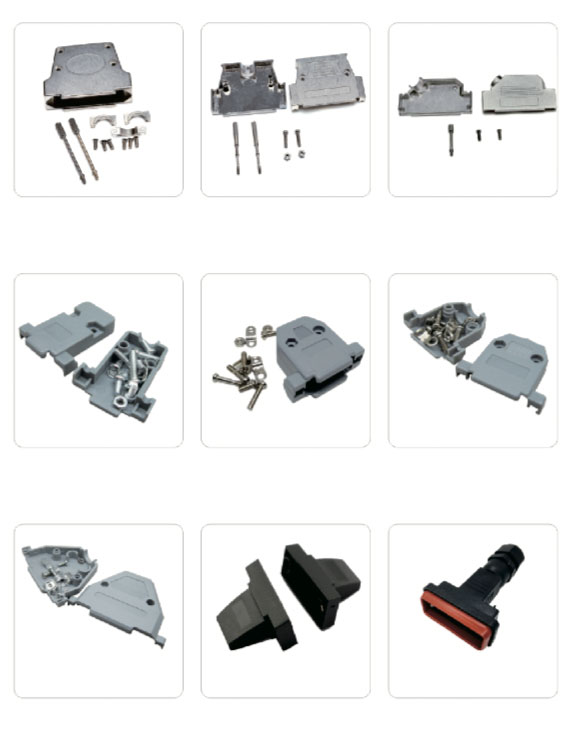
Have you ever wondered why some D-Sub cables last for years while others fail prematurely? As someone who's worked with D-Sub connectors (db9, db15, db25) for over a decade, let me share some industry insights about these often-overlooked components.
The Unsung Heroes: D-Sub Backshells
That metal or plastic housing at the rear of your D-Subminiature connector isn't just cosmetic - it's the first line of defense. For IP67 D-Sub waterproof connectors, the backshell is part of the sealing system that keeps moisture out.
Quality backshells provide:
-
Strain Relief - Prevents cable movement from damaging internal connections
-
EMI Shielding - Critical for High Power D-Sub Connector applications
-
Environmental Protection - Especially important for waterproof D-Sub connector models
Accessories Matter More Than You Think
Many engineers focus solely on the D-Sub male connector or D-Sub connector female parts while neglecting crucial accessories:
-
Proper cable clamps prevent stress on solder joints
-
Correct sealing gaskets maintain IP ratings
-
Appropriate grounding ensures EMI performance
Practical Q&A
Q: Metal or plastic backshells?
A: Metal offers better shielding but adds weight. Plastic works well for lightweight applications but provides less protection.
Q: Why does my D-Sub connection keep failing?
A: Before blaming the connector, check if your backshell is properly securing the cable. Most failures occur at the solder joints due to movement.
Q: Are backshells interchangeable between brands?
A: Not recommended. Even slight dimensional differences can compromise sealing and strain relief in D-Sub Power Connector applications.
Pro Tips for Longevity
-
Match the environment - Outdoor use demands proper waterproof D-Sub connector accessories
-
Consider cable diameter - Too tight damages wires, too loose defeats the purpose
-
Plan for maintenance - Especially important with dense db25 connectors
Remember: A quality D-Sub assembly is only as strong as its weakest component. Investing in proper backshells and accessories ensures your connections last as long as the equipment they serve.
(If you need help selecting the right D-Sub solution for your application, let's talk. I'd be happy to share lessons learned from years of field experience.)