

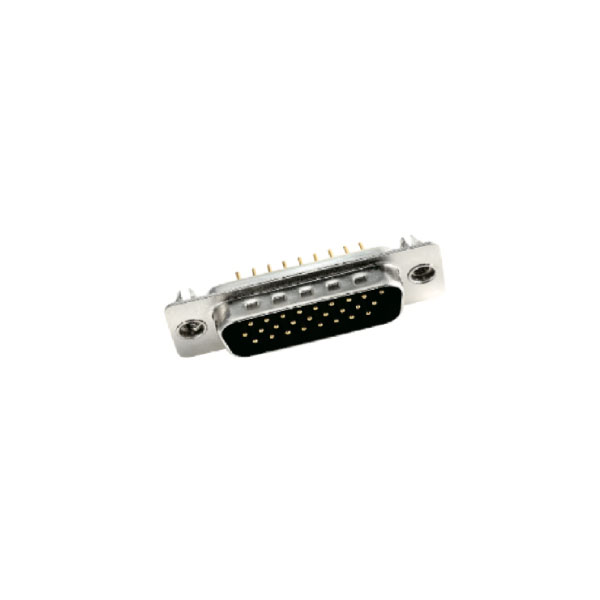
As a manufacturer specializing in D-Sub connectors for 20 years, I often get asked this question: "In industrial environments, should I use D-subminiature Connector or HDMI?" Today, let's discuss this seemingly simple but actually quite thought-provoking topic.
Why Are "Antique" D-Subs Still Used in Industrial Fields?
You might find it strange - it's 2025 already, HDMI is so advanced, yet factories are still full of those somewhat "retro" looking D-Sub Connectors. Are these companies unwilling to upgrade?
Quite the opposite! In industrial applications, reliability always comes first. D-Sub Power Connectors have proven their durability over decades. Imagine a factory environment full of vibrations, dust, and extreme temperatures - would you really trust those delicate interfaces designed for home entertainment?
Industrial Advantages of D-Sub Connectors
Let me tell you why High Power D-Sub Connectors remain many engineers' first choice for industrial applications:
-
Mechanical Strength: Models like DB9, DB15, DB25 with their metal shells and robust locking mechanisms can withstand rough handling in industrial environments
-
Environmental Resistance: IP67 D-Sub and Waterproof D-Sub connectors can resist dust, moisture, and even direct water impact
-
Reliability: Simple pin design means fewer failure points, performing stably in high temperature or EMI environments
-
Versatility: From signal transmission to power supply, Power D-Sub can meet various needs
-
Easy Maintenance: The design of D-Sub male connector and D-Sub connector female makes field replacement extremely simple
When Is HDMI More Appropriate?
Of course, I'm not saying HDMI is useless. For industrial applications requiring high-bandwidth video transmission like control centers, digital signage, or medical imaging equipment, HDMI does have its advantages. But the question is - does your application really need 4K video?
Q&A Section
Q: Our equipment needs HD video transmission but operates in harsh environments. What should we choose?
A: In this case, consider using IP67 D-Sub with appropriate video protocols, or look for industrial-grade HDMI solutions (but at much higher cost).
Q: What are the differences between DB9, DB15, and DB25? How to choose?
A: The numbers represent pin counts - DB9 for simple control signals, DB25 for more complex multi-signal transmission. Consider current needs and future scalability when choosing.
Q: Why are some D-Sub connectors particularly expensive?
A: Military-grade or special environment High Power D-Sub Connectors use more durable materials and stricter processes, like gold-plated contacts or special sealing designs.
Q: Will D-Sub connectors be phased out?
A: Possibly in consumer electronics, but in industrial, military, aerospace and other special fields, D-Subminiature Connectors will remain due to their proven reliability.
Making the Smart Choice
Ultimately, choosing between D-Sub and HDMI isn't about which technology is newer, but which better suits your specific application. In my years of experience, I've seen too many field failures caused by improper interface selection - the losses far exceed any savings on connector costs.
Remember, in industrial environments, "adequate and reliable" often trumps "newest and fastest." Next time you face this choice, ask yourself: What environment will this device work in? What signals need transmission? What are the maintenance conditions? Answer these, and the right choice usually becomes clear.
If you're still unsure, feel free to reach out - with our decades specializing in D-Sub Connectors, we've probably seen more application scenarios than you imagine. Sometimes, a simple connector choice can determine the stable operation of an entire system!