

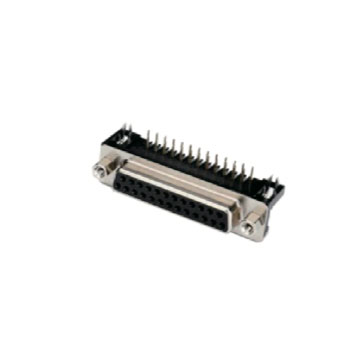
As a seasoned veteran in the connector industry, I often get asked all sorts of questions about D-Sub connector dimensions. Let me tell you, these seemingly simple little components have more nuances than you'd think! Today, I'm going to share some "secrets" about D-Sub connector sizes that will give you a whole new perspective.
D-Sub Connector Size Standards: How "Standard" Are They Really?
We always talk about "standard D-Sub sizes," but do you know how many details lie behind this "standard"? Here's an interesting fact: even for the same D-Sub connector model, products from different manufacturers may have slight dimensional variations. It's like buying shoes - they might all be labeled size 10, but the fit can vary dramatically between brands!
Why does this happen? Because international standards allow for certain tolerance ranges. Quality manufacturers will maintain tighter dimensional controls within these standard ranges to ensure connector reliability and durability. This reminds me of a customer who once complained: "Why are my DB9 connectors so hard to plug and unplug?" Turned out it was due to poor tolerance control.
Detailed Look at Common D-Sub Model Dimensions
DB9 Connectors: Small But Mighty
The DB9 is probably the most common D-Sub variant we encounter. Don't let its compact size fool you - it's been a workhorse in serial communications! Its shell measures approximately 31.5mm wide and 10.5mm tall. But here's something you should know: the pin arrangement and spacing are equally important when selecting DB9 connectors. I once worked with an engineer who splurged on "premium" DB9s, only to discover the pin spacing didn't match his equipment requirements - a costly mistake in both time and money.
DB15 Connectors: More Than Just VGA
Mention DB15, and most people immediately think of VGA connections. True, it's been instrumental in video transmission. But DB15s have many more applications! The standard shell measures about 38.5mm wide and 10.5mm tall. Interestingly, DB15s used for VGA versus industrial control can have completely different internal configurations. I recall a customer who nearly ordered the wrong type - he assumed all DB15s were identical and almost made a costly error!
DB25 Connectors: The Parallel Port Legend
Remember those large interfaces on old printers? That's the DB25! Its shell measures approximately 53mm wide and 10.5mm tall. While not as common today, DB25s remain essential in certain professional fields. I once helped a medical equipment manufacturer solve a tricky problem: their devices required DB25 interfaces, but inconsistent sizes in market offerings caused assembly issues. Through precise measurements and careful selection, we found the perfect matching solution.
Dimensional Considerations for Special D-Sub Types
High Power D-Sub Connectors: Strength Behind the Size
When discussing High Power D-Sub Connectors, people often ask: "They look about the same size as regular D-Subs, don't they?" The exterior might appear similar, but the internal architecture is completely different! High-power versions typically need larger conductors and more robust shells to handle current loads. It's like comparing weightlifters to average people - same basic anatomy, but vastly different capabilities!
Waterproof D-Sub Connectors: The Perfect Balance of Size and Sealing
IP67-rated waterproof D-Subs are a personal favorite topic of mine. Achieving waterproofing requires extremely precise dimensional design. The placement of gaskets, shell fit tolerances - every detail matters. I've tested so-called "waterproof" D-Subs on the market only to find some products just slapped on a rubber ring without meeting true IP67 standards. This shows how dimensional accuracy directly impacts performance!
Practical Tips for Measuring D-Sub Connectors
"How do I know if this D-Sub's dimensions will work?" is a common question. My advice: don't just go by the model number! Whether it's DB15 or DB25, actual measurements are key. Here are some practical tips:
-
Use digital calipers to measure shell dimensions
-
Pay attention to pin/socket arrangement
-
Check mounting hole positions and sizes
-
Verify mating surface compatibility
Remember, even minor dimensional differences can cause connection failures or poor contacts. As I often tell customers: "A miss is as good as a mile!"
FAQ: Common Questions About D-Sub Dimensions
Q: Are D-Sub male and female connector dimensions different?
A: Great question! The shell dimensions are typically identical between plugs and sockets. But the internal contact arrangements and depths differ. Always verify mating compatibility, or you might face the "looks like it fits but doesn't work" dilemma.
Q: Why do some DB25s feel much harder to connect/disconnect than others?
A: This likely relates to dimensional tolerances. Quality D-Sub connectors optimize fit within standard ranges - not too loose (causing poor contact) nor too tight (making connection difficult). I recommend suppliers with strict dimensional controls.
Q: Are waterproof and standard D-Subs the same size?
A: They might appear similar, but waterproof D-Subs often have additional sealing features that can slightly alter dimensions. Especially IP67-rated versions have special shell design considerations. Always verify specific dimensions before purchasing!
Q: Do high-density and standard D-Subs share the same dimensions?
A: That's a technical question! High-density D-Subs (like D-Sub HD) pack more contacts into similar shell sizes, so internal arrangements differ completely. While shells might appear similar, they're absolutely not interchangeable. I've seen engineers force-mate them, only to damage expensive equipment ports!
Final Thoughts: Small Sizes, Big Implications
After all this discussion, my point is this: D-Sub connector dimensions may seem simple, but they're full of intricacies. In my line of work, I've seen countless failure cases caused by dimensional issues. Sometimes, equipment malfunctions trace back to mere millimeter-level discrepancies!
If you're sourcing reliable D-Sub connectors, my advice is: don't just consider price and appearance - dimensional accuracy and consistency are what truly matter. After all, in industrial applications, reliability trumps everything, doesn't it?
Next time you handle a D-Sub connector, take a moment to appreciate its dimensional details - these seemingly minor design elements represent so much engineering wisdom! If you have any D-Sub dimension questions, I'm always happy to help. Remember, with connectors, the devil's in the details!