

Introduction: When EMI Becomes the "Silent Killer" of Defense Equipment
Ever had this frustrating experience? Your device works flawlessly in the lab, but the moment it hits the field, signals start dropping, data gets corrupted, or worse—the system fails completely. Now imagine this happening in a defense application, where reliability isn’t just about performance—it’s about mission success.
That’s exactly the challenge one of our defense clients faced. Their critical equipment kept malfunctioning in high-EMI environments, and despite trying multiple fixes, nothing worked long-term. That’s when they reached out to us for a robust D-Sub connector solution.
The Problem: Why Standard D-Subs Fail Against EMI
Before diving into the solution, let’s break down why electromagnetic interference (EMI) is such a big deal. Think of EMI as "electronic noise"—it disrupts signals, causes data errors, and can even damage sensitive electronics.
Defense systems operate in some of the harshest environments: high-power radars, wireless comms, motor drives—all generating intense EMI. Standard DB9, DB15, and DB25 connectors are rugged, but without proper shielding, they’re vulnerable to interference.
The Client’s Pain Points:
-
Signal degradation – Data corruption and transmission errors.
-
Failed EMC compliance – Couldn’t meet military-grade electromagnetic compatibility (EMC) standards.
-
Poor environmental resilience – Needed reliability in moisture, vibration, and extreme temperatures.
Our Solution: How Shielded D-Sub Connectors Saved the Day
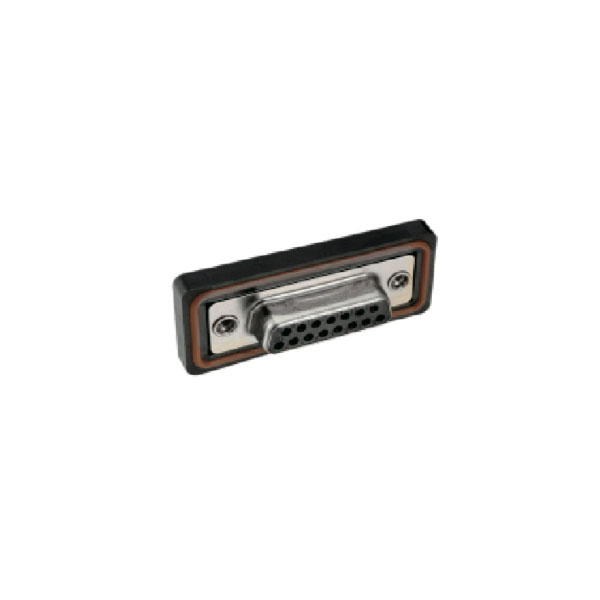
If standard D-Subs weren’t cutting it, what would? After thorough analysis, we recommended shielded D-Sub connectors with IP67-rated sealing—ensuring performance even in the toughest conditions.
Key Improvements:
-
Metal Shielding + 360° EMI Protection
-
Unlike plastic-shell D-Subs, our shielded versions use a metal casing with full-grounding to block interference.
-
Optimized grounding paths divert EMI away from critical circuits.
-
-
High-Density Contact Layout for Clean Signals
-
For DB9, DB15, and DB25 configurations, we minimized crosstalk by refining pin arrangements.
-
-
IP67 Waterproofing for Harsh Environments
-
Defense gear faces rain, dust, and even submersion—our IP67 waterproof D-Sub connectors keep moisture and debris out.
-
-
Custom Pin Configurations for High-Power Needs
-
For Power D-Sub and High Power D-Sub Connector applications, we upgraded contact materials to handle higher currents safely.
-
Results: From Unreliable to Battle-Ready
After switching to our shielded D-Subs, the client’s equipment aced EMC testing. Signal integrity improved dramatically, even in high-EMI zones.
Their feedback? "We tried everything—only your shielded D-Subs truly fixed our EMI issues. Now our systems run reliably in the worst conditions."
FAQ
Q1: What’s the difference between shielded and standard D-Subs?
A: Standard D-Sub connectors (e.g., DB9, DB25) lack EMI protection. Shielded versions add metal housings and grounding to block interference—critical for defense/industrial use.
Q2: Can IP67 D-Subs be used underwater?
A: They resist temporary immersion (like rain or spills), but continuous submersion may require higher IP ratings.
Q3: How much current can a High Power D-Sub handle?
A: It depends on pin size/material—our High Power D-Sub Connectors support anywhere from a few amps to 50A+ with custom designs.
Q4: Should I use male or female D-Subs?
A: D-Sub male connectors plug into ports, while D-Sub female connectors receive them. Match your device’s interface requirements.
Final Thought: Is EMI Sabotaging Your Equipment?
EMI doesn’t have to be a nightmare. With the right shielded D-Sub connector, you can boost reliability in even the noisiest environments. Our solutions have proven themselves in defense, industrial, and high-power applications.
If your gear is struggling with interference, let’s talk—maybe we can help you engineer a fix! ?