

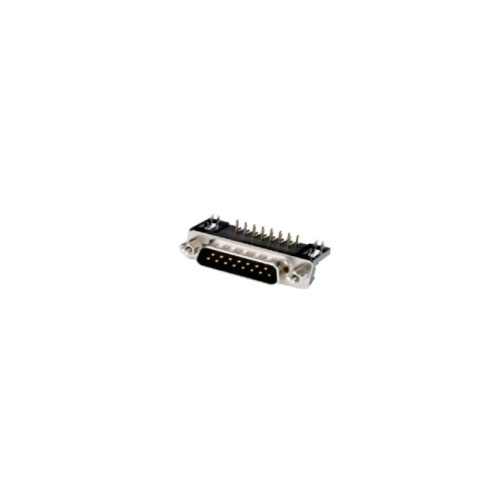
Hi everyone, I’ve been in the D-Sub connector industry for years, working closely with both domestic and international clients. Today, I want to talk about something really practical: how can you actually judge the quality of D-Sub connectors (also called D-subminiature connectors) when sourcing from China? With so many products and prices out there, quality can vary a lot, right?
Have you ever worried that the D-Sub connectors you bought might develop contact issues after just a short time? Or that they won’t really meet the waterproof rating you need? Don’t worry—based on my experience, I’ll share some practical tips to help you avoid common pitfalls when sourcing.
1. Check the Materials—Don’t Just Take the Supplier’s Word for It!
Did you know? The shell and terminal materials of a D-Sub connector directly affect its durability and performance. Some manufacturers use recycled copper or low-quality plastic to cut costs. Products like that might seem fine at first, but over time, oxidation, deformation, and poor contact can become real headaches.
So how do I check exactly?
-
Ask about the materials: Is the shell made of steel or plastic? Is the plating gold or tin? How thick is the gold plating? These details matter—they impact conductivity and corrosion resistance.
-
Request material reports: Reputable suppliers are usually happy to provide documentation, like RoHS compliance reports, to show the materials are free from harmful substances.
Think about it: if a High Power D-Sub Connector uses poor-quality materials, it could overheat under high current—how risky is that!
2. Pay Attention to Workmanship—Details Make the Difference!
I visit factories often, and one thing stands out: the difference between a good and a bad connector often comes down to craftsmanship. For example, if the molding process isn’t done well, the D-Sub connector female housing may have burrs that cause wear after just a few mating cycles.
So how can you evaluate workmanship?
-
Inspect the appearance: Check samples carefully—are there scratches on the shell? Is the plating even? Are the pins aligned neatly?
-
Test the手感 (handfeel): Plug and unplug the D-Sub male connector. Does it feel smooth? If it’s too tight or too loose, there might be an issue.
-
Focus on the solder pins: If the plating is uneven or there’s poor soldering, you’ll run into headaches later during assembly.
By the way, if you need waterproof features, like with an IP67 D-Sub or Waterproof D-Sub connector, be sure to check the sealing ring material and assembly precision—if manufacturers cut corners here, the waterproof performance just won’t hold up.
3. Performance Testing—Don’t Skip This Step!
Can you judge quality just by looking at the appearance and materials? Of course not! Performance testing is what really counts. Whenever I evaluate a new supplier, I always ask for test reports, and sometimes I even sample-test myself.
What tests are usually done?
-
Electrical performance: Contact resistance, insulation resistance, withstand voltage—these are the basics! Connectors like DB9, DB15, and DB25 all have different electrical requirements based on pin count.
-
Mechanical performance: Durability (mating cycles), terminal retention, vibration resistance… Consider your application—if it’s for industrial use, mechanical stability is super important.
-
Environmental suitability: High/low temperature tests, salt spray tests—especially for outdoor products like IP67 D-Sub. How can you use them without rigorous environmental testing?
I remember one case where a customer had a D-Sub Power Connector that kept failing. It turned out the salt spray test wasn’t done properly, and the terminals corroded. So really, never skip the test reports!
4. Certifications and Compliance—They’re Not Just Paperwork!
As a buyer, you don’t want products that don’t meet industry standards or export regulations, right? For example, if your client requires UL certification or CE compliance, and the manufacturer can’t provide it, you could lose the order.
That’s why I always ask:
-
What certifications do you have?: Common ones include UL, CE, RoHS, and even industry-specific certifications.
-
Are the certifications genuine?: Some smaller suppliers might cut corners. It’s best to ask for certification numbers and verify them yourself.
These certifications aren’t just for show—they represent safety and reliability. If anything goes wrong, they can save you from bigger losses.
5. Factory Visits—If You Can Go, Do It!
I know it’s not always possible to visit factories in person, but if you can, I highly recommend it. Why? Because the factory environment, equipment, and management style tell you a lot about their commitment to quality.
I’ve visited some factories where the workshop was messy, workers operated carelessly—can you really trust them to produce high-quality D-Sub connectors? I don’t think so.
On the other hand, good factories usually have clean workshops, well-maintained equipment, and even dedicated QC areas—these details don’t lie.
If you can’t visit, ask for a video tour or more photos and videos of the production process. With smartphones everywhere, this shouldn’t be a problem, right?
6. Don’t Overlook Reputation and Long-Term Partnership!
Last but not least: reputation. A reliable supplier won’t just focus on one-time deals. They’ll want to build a long-term relationship and even help you solve technical problems.
How can you assess reputation?
-
Look at their client list: Who have they worked with? Are there referrals from others in your industry?
-
Evaluate communication: Do they respond quickly? Are they patient in answering your questions? For example, if you ask about the difference between Power D-Sub and High Power D-Sub Connector, can they explain clearly?
-
Start with a trial order: Place a small order first, test the products, and then scale up—it’s the most practical way to reduce risk.
FAQs (Frequently Asked Questions)
Q1: What’s the difference between D-Sub Connector and D-Subminiature Connector?
They’re the same thing! D-Subminiature is the full name, but it’s commonly shortened to D-Sub Connector in the industry.
Q2: How do I choose between DB9, DB15, and DB25?
It depends on how many pins you need! DB9 has 9 pins and is often used in serial communication; DB15 has 15 pins, like in old VGA ports; DB25 has 25 pins and is still used in some industrial equipment. Besides pin count, also consider current and voltage requirements!
Q3: Are IP67 D-Sub and Waterproof D-Sub connector the same?
IP67 is a protection rating standard, meaning it’s dust-tight and can withstand temporary immersion. “Waterproof” is a general term—if you need real waterproof performance, always look for the IP rating instead of just taking the supplier’s word for it.
Q4: How do I distinguish between D-Sub male connector and female connector?
It’s simple! Male connectors have pins (plug), and female connectors have sockets (jack). Be careful not to mix them up when ordering—otherwise, they won’t mate properly!
Q5: What’s the difference between Power D-Sub and standard D-Sub?
Power D-Sub usually refers to D-Sub connectors that can handle higher currents, like those used for power supply in equipment. They have thicker terminals and may use different materials—don’t substitute them with standard D-Sub connectors!
Final Thoughts
Sourcing D-Sub connectors might seem straightforward, but there’s more to it than meets the eye. These little components matter—if the quality isn’t there, they can cause bigger problems in your devices, and the售后 (after-sales) costs can add up.
That’s why I always tell my clients: while price is important, quality is fundamental. Especially when sourcing from China, where the market is huge and options are plenty, but quality can be mixed—staying alert, asking questions, inspecting, and testing are key to finding a reliable supplier.
I hope these tips help! If you have more questions about D-Sub connectors, feel free to reach out. I’ve been through it all and know that quality is what keeps the business going.
(Hey, found this useful? If so, share it with others who might need it!)