

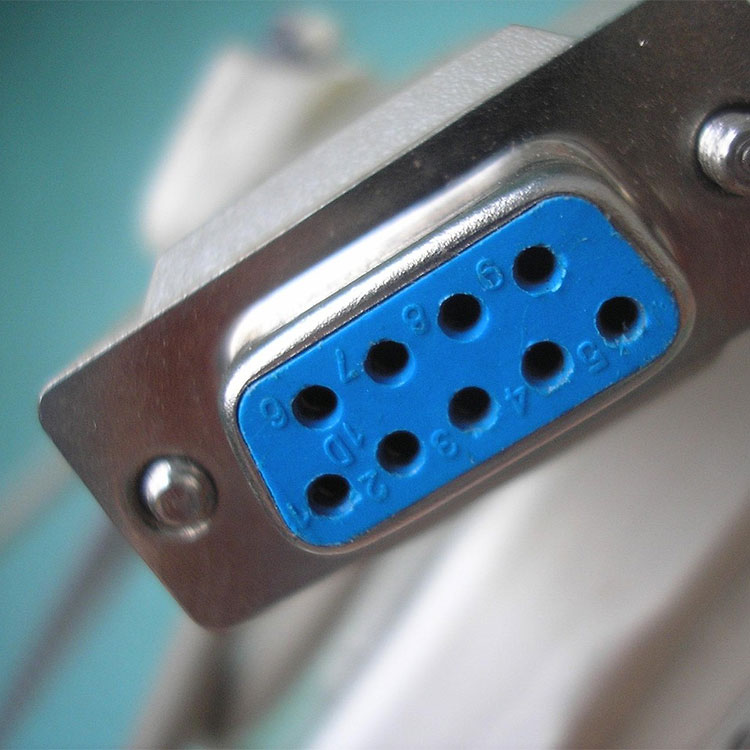
Let's skip the complex specs today and have a chat, just like old friends, about a little gadget that almost everyone in industrial control or communications has run into—D-Sub gender changers and adapters. You know that moment? You're staring at a bunch of cables, scratching your head because you've got a male connector facing another male, or a female that just can't connect to another female. Or maybe your device has a DB9 port, but the cable in your hand is a DB25.
Don't be shy; I've seen this countless times! Today, I want to share some of the "tricks" I've picked up over the years to help you avoid these compatibility headaches. My goal is to make you feel like an experienced captain, smoothly navigating through these connection challenges.
Part 1: First Things First: What Are They, and Why Would You Need One?
In simple terms, think of a D-Sub gender changer or adapter as a "translator" or a "bridge." Its job is to connect two D-Sub interfaces that otherwise couldn't talk directly to each other.
Picture this: you have a device with a D-Sub connector female (the one with the holes), and your cable also has a D-Sub connector female. Both are "receptive"—how do they connect? This is where a "male-to-male" gender changer comes to the rescue. It has pins on both ends, perfectly bridging the two.
The same logic works the other way around. So, its core value is solving physical shape mismatches.
Part 2: When Choosing, Don't Just Look at the "Looks"! These Details Are Key
It's easy to think these things are simple—just grab any one off the shelf. But then you get it, and it either doesn't fit, feels loose and wobbly, or worse, damages your equipment's port! Oh boy, how frustrating is that?
So, we need to look closer and pay attention to these details that matter much more than just appearance:
-
Interface Type and Pin Count: This is basic!
-
Do you need DB9, DB15, or DB25? You absolutely cannot get this wrong. Counting the pins is like putting on your shoes—you need the right fit.
-
Do you need "male-to-female," "female-to-male," "male-to-male," or "female-to-female"? Mentally sketch the connection diagram, and it'll become clear.
-
-
Shell Material and Shielding: Is it tough? Does it fight interference?
-
A quality gender changer typically has a metal shell as standard. This isn't just for durability; it's crucial for providing good electromagnetic shielding. Think about it: in harsh industrial environments, electromagnetic interference is everywhere. An unshielded adapter is basically "running naked," likely to drown your signal in "snow." It's something we pay extreme attention to in our own production of D-Sub Connectors.
-
-
Plating Quality: Don't underestimate that layer of "gold" or "silver."
-
The plating on the contacts (like gold or tin) directly affects electrical conductivity and corrosion resistance. Especially in humid environments, a quality gold plating ensures stable signal transmission and stands the test of time without oxidizing. This is vital for guaranteeing reliable, long-term connections.
-
-
Special Environmental Needs: Is your workspace demanding?
-
If your equipment operates outdoors, or in environments with oil, grease, or dust, a standard adapter might not cut it. This is when you need to consider a solution designed for IP67 D-Sub or a waterproof D-Sub connector. These use special seals and designs to effectively keep out water and dust, ensuring a fail-safe connection.
-
Part 3: Q&A Session: Tackling Your Real-World Questions
I know you might still have some specific questions buzzing around. Let's tackle a few common ones:
Q1: My device has a DB9 female port, and my cable is a DB15 male. What should I do?
A1: Ah, you've hit the classic "pin count mismatch" problem! In this case, you'd be looking for a "DB9 male to DB15 female" adapter. But here's a critical heads-up: adapters between different pin counts often only connect specific pins, not all of them one-to-one. So, it's super important to understand your device's pinout signal definition, or find a supplier that can provide custom wiring.
Q2: I just want to extend a D-Sub cable. Is it better to use a gender changer/adapter combo or just get a single, longer cable?
A2: Great question! For signal integrity, using one complete, longer cable is usually the better choice. Why? Because every extra connection point is a potential spot for signal loss and future failure. Gender changers and adapters are best for solving physical interface mismatches or for temporary extensions. If space is super tight and you must use them to extend, please, choose a high-quality, shielded product.
Q3: I need to carry a fairly high current. Can a standard D-Sub gender changer handle it?
A3: This is a crucial question! Standard D-Subminiature Connectors and their adapters are designed for signal transmission. Their pins have limited current-carrying capacity. If you need to transmit significant power—like driving a motor or a high-power device—you must use adapters based on connectors specifically designed for that purpose, like a High Power D-Sub Connector or Power D-Sub. These have heavier-duty pins and materials to handle the current. Safety first—never mix and match here!
Q4: Why are some gender changers so incredibly tight to plug in and a real struggle to unplug?
A4: The feel of insertion and withdrawal is a great quality indicator. If it's excessively tight, it could be due to poor tolerance control between the male and female shells, or misalignment of the pins and sockets. Long-term, this can damage the equipment's native port. A well-made gender changer should connect smoothly, with a firm yet elastic feel, and shouldn't wobble noticeably once seated.
Wrapping Up: A Small Part Can Make or Break Your Whole System
After all these years in the business, my biggest lesson is this: details determine success. A seemingly insignificant D-Sub gender changer or adapter, if chosen wrong, can cause anything from unstable signals and frequent device errors, to damaging expensive core equipment and bringing an entire production line to a halt.
So, I hope what I've shared today gives you more confidence and less confusion the next time you're picking out these small but critical components. We firmly believe that providing professional, reliable, and durable connection solutions isn't just about selling a product. It's about being a partner in our customers' success.
If you ever run into any tricky situations with D-Sub Connectors in your projects—whether it's about standard parts, or you need something special like a waterproof D-Sub connector or a D-Sub Power Connector—please don't hesitate to reach out. Our job is to smooth the path for you, making sure your signals flow without a hitch!