

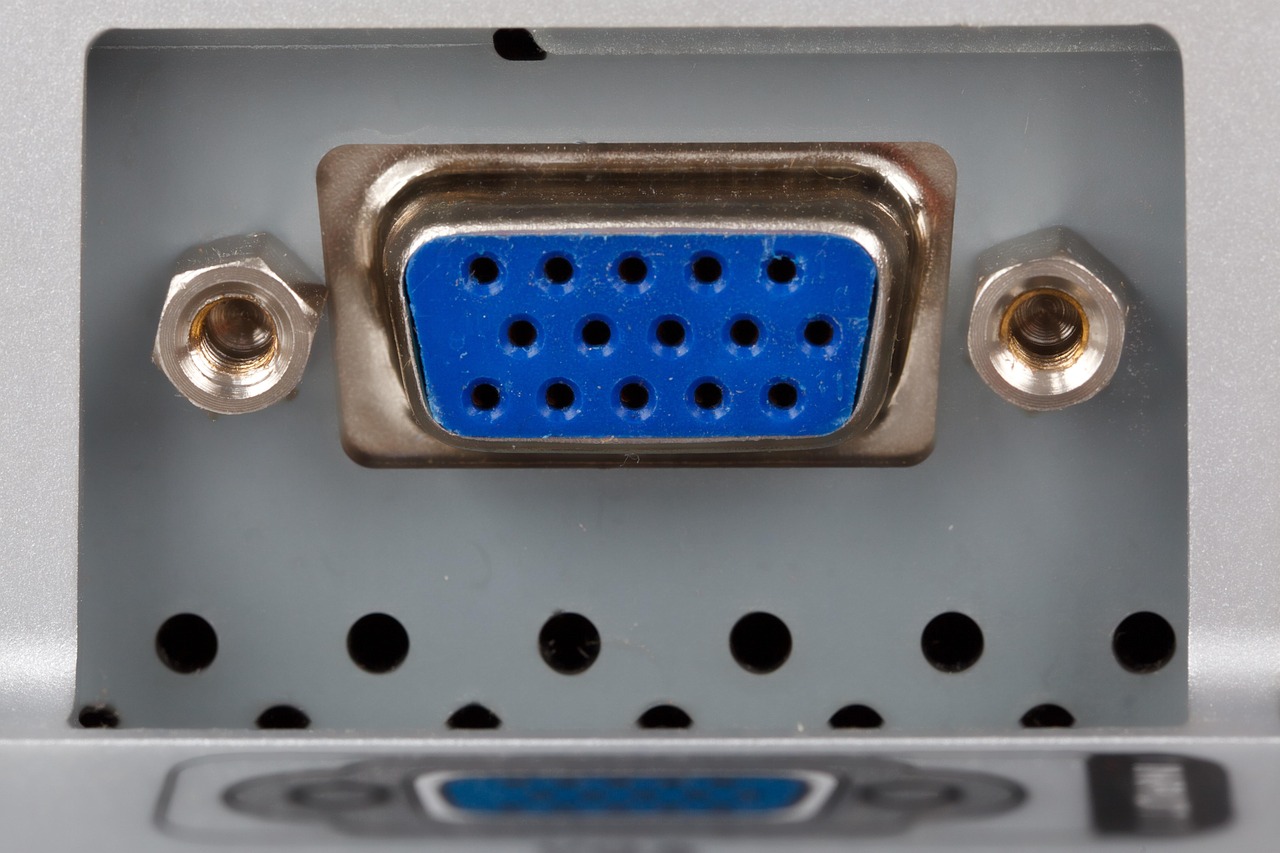
Oh, friends, let's talk about something that seems simple but often gives people a real headache - D-Sub gender changers and adapters. Have you ever experienced this frustration: you excitedly buy an adapter, thinking your problem is solved, only to find it doesn't fit? Or maybe it plugs in but the signal comes and goes, leaving you stomping your feet in anger?
I've been there! After all these years in the industry, I've seen my fair share of compatibility "accident scenes." So today, I want to share from my personal experience and talk heart-to-heart about how to smartly avoid these pitfalls and find that "perfect match" adapter.
First Things First: Is Your D-Sub Interface Really "Single"?
Before playing matchmaker with an adapter, you need to understand the actual situation of both "main characters." Don't laugh, this is the first step!
We all know that standard D-Sub Connectors come in male (with pins) and female (with sockets). So-called "conversion" basically boils down to these scenarios:
-
Male to Female: This is probably the most common. For example, your device has a D-Sub male connector protruding, but your cable also ends with a male connector. In this case, you need a "female" intermediary to connect the two.
-
Female to Male: The reverse is also true.
-
Converting Between Different Pin Counts: For example, converting DB9 to DB15, or DB25? Be extra careful here, as it involves signal definition mapping - it's not just about physically converting the interface.
So, here's the first soul-searching question: Are the interfaces on your two devices male or female? How many pins does each have? Grab your phone, take a picture, and count carefully. It's the simplest but most effective method!
More Than Just Plugging In: Those Easily Overlooked Compatibility "Killers"
You think if it plugs in physically, you're all set? Too naive! The real compatibility issues often hide where you can't see.
1. The "Inner World" of the Pins: Do the Signal Definitions Match?
This is the absolute core! For example, two DB15 interfaces: one might be for VGA video transmission, another for industrial control. The signals defined for each pin are worlds apart. If you connect them with a simple passive adapter, how could they possibly work correctly?
My advice: Before buying, always check the interface definition manuals for both devices. If you can't find them, consult the adapter supplier and explain your specific application scenario clearly. A reliable supplier (like us) can help determine if this conversion is feasible.
2. "Tough Guy" or "Soft Girl"? Ones with Screw Locking are True Love
Have you ever used those adapters without screws? They feel loose, and if the cable gets snagged accidentally, the connection can loosen, causing signal dropouts. In industrial environments or scenarios requiring frequent plugging/unplugging, this is a disaster!
Therefore, please insist on adapters with screw locking features. They ensure a solid connection, like a firm handshake, resistant to vibration and pulling. This small design detail makes a huge difference in user experience.
3. When the Environment "Roars," Can Your Adapter Handle It?
Is your equipment in a clean office, or in a dusty, greasy workshop? Or, might it even be exposed to water spray?
In these cases, ordinary adapters are too delicate. You might need to consider IP67 rated waterproof D-Sub connectors. These feature special sealing rings and metal housings, ensuring the internal pins remain dry and clean even in harsh environments, guaranteeing reliable signal transmission.
Imagine this: A waterproof D-Sub interface used on outdoor equipment, connected via a non-waterproof adapter. A light rain could paralyze your entire system. Isn't the potential cost too high?
4. Full of Power? Beware of "Insufficient Power"!
Nowadays, High Power D-Sub Connectors and D-Sub Power Connectors are becoming more common. They are specifically designed to carry higher currents.
If you need an adapter for such high-power applications, please, please, PLEASE confirm the current-carrying capacity of the adapter! Using a standard signal adapter for high-power transmission is like asking a child to carry a heavy rock - not only will they fail, but they might get "hurt" (overheat, burn out), even endangering your equipment.
Practical Q&A: Addressing Key Questions
Alright, enough theory. Let's get practical. Here are some questions I get asked the most, which might solve your current dilemma.
Q1: I have a DB9 male connector and want to convert it to a DB15 female socket. Is this possible?
A: This is a classic pin-count conversion issue. The answer is: It is achievable, but it's NOT a simple straight-through connection. What you need is a "signal converter," not just a "physical adapter." Its internal circuitry must redefine and map the signals. So, when searching, be sure to specify your signal conversion requirement (e.g., is it converting from a specific serial protocol to VGA?), not just asking for a DB9 to DB15 head.
Q2: What are the visually obvious quality differences between a D-Sub female and a D-Sub male adapter?
A: Absolutely! Besides the screws mentioned earlier, focus on these points:
-
Shell Material: Good adapters typically use metal shells, which are not only sturdy but also provide better electromagnetic shielding.
-
Plating Quality: Look at the plating on the pins or sockets. Is the color even and bright? Good gold plating reduces oxidation, ensures good contact, and extends lifespan.
-
Molding Craftsmanship: Is the connection between the shell and the interface smooth, firm, and free of burrs? This reflects the manufacturer's craftsmanship.
Q3: I want to use the standard D-Sub interface on my device outdoors. Any good solutions?
A: The best solution is to use an IP67 waterproof D-Sub adapter. It acts like a protective shell, connecting to your device's standard interface on one end and providing a waterproof D-Sub connector interface on the other, allowing you to connect a corresponding waterproof cable. This protects the device interface while meeting your outdoor connection needs.
Final Thoughts: My Honest Words
See, there's quite a bit to learn about a small adapter, isn't there? It's not just a bridge for electrical connection; it's a guardian for signal stability and equipment safety.
I'm writing this article not just to sell you a product. I genuinely hope that by sharing this knowledge and experience, I can help you develop a "keen eye" for selecting adapters. So next time you need one, you can confidently and accurately find the one that best suits your needs, avoiding wasted time, money, and, more importantly, preventing project delays caused by a small component.
After all, we share the same goal: to get the equipment running stably and reliably, right?
If you have any uncertainties regarding the selection of D-Subminiature Connectors, don't hesitate to come talk to us. Our value lies in using our professional experience to clear every obstacle from your path forward.