

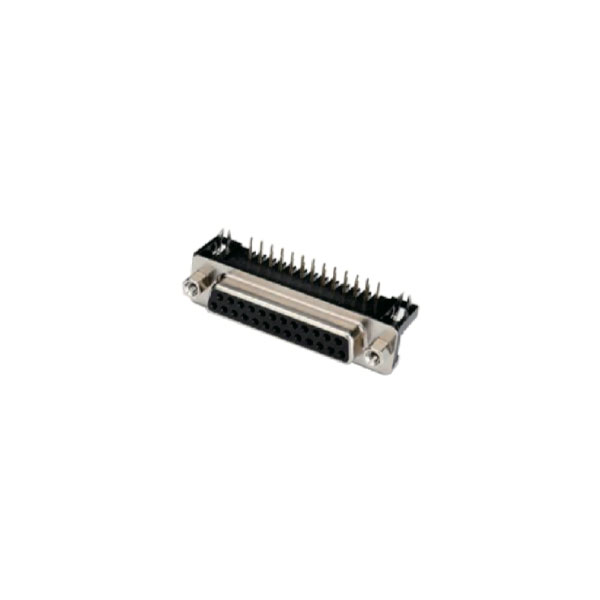
After 15 years specializing in D-Sub connector development, one question always gets me excited: "Which D-Sub works best in robotic joints?" Let me tell you, nothing tests a connector's limits like robotic applications!
Did you know? Standard D-Subs fail within 3 months in robot joints, while properly selected models last over 3 years. Today I'll share 5 make-or-break specifications based on real-world experience.
Why Robot Joints Demand Special D-Sub
Imagine industrial robot arms performing 10,000+ daily movements. The connectors in those joints endure unbelievable stress! Our most extreme case—a welding robot wrist joint enduring 3 million annual bends. How long would office-grade D-Subs last there? Maybe a month if lucky.
The million-dollar question: What makes a D-Sub survive this torture? After thousands of lab hours and field data, we've identified 5 critical specs...
Critical Spec #1: Vibration Resistance ≥5G
"Vibration isn't serious," you say? Dead wrong! The instant shock when robots accelerate can displace pins by microns. Over time, contact resistance skyrockets.
Lab results: At 3G vibration, standard D-Subs showed 15% resistance increase after 200 hours. Industrial-grade models? Just 2% increase after 1,000 hours at 5G.
How to verify: Check for MIL-STD-202G Method 214 compliance. Remember: 5G minimum for industrial bots, 3G for collaborative robots.
Critical Spec #2: Minimum Bend Radius ≤15x Cable Diameter
This is crucial! Many report "intact cables but intermittent signals"—caused by internal wire breaks from tight bending.
Painful lesson: A SCARA robot user saw 25% connector failures after 6 months. Why? Bend radius measured just 20x cable diameter at full articulation.
Pro tip: Use high-flex cables with D-Subs maintaining ≥15x diameter bend radius (10x ideal). Example: For 2mm cables, keep bends ≥30mm radius.
Critical Spec #3: Mating Cycles ≥5,000
"We rarely unplug them!" I hear often. Misguided! Maintenance requires disconnection, plus vibration creates "micro-cycles."
Field observation: Automotive welding robots undergo biannual servicing—10+ cycles in 5 years. Standard 500-cycle D-Subs can't cope!
Selection secret: Check gold plating—minimum 50μinch (1.27μm) thickness ensures reliability after 5,000 cycles. Don't fall for "gold-plated" claims without thickness data.
Critical Spec #4: Temperature Range -40℃~105℃
Think robots work in climate-controlled spaces? Think again! Extreme cases we've seen:
-
80℃ near welding robots
-
-30℃ in freezer warehouses
-
100℃+ on sun-exposed outdoor bots
Material matters: Standard plastic housings warp or brittle. Choose PPS or LCP housings with fluorosilicone seals (not basic silicone).
Critical Spec #5: IP67 Rating or Higher
"Our clean facility doesn't need protection," said one client... who replaced all connectors within months. Hidden joint threats include:
-
Conductive metal dust
-
High-pressure wash mist
-
Lubricant seepage
Key protections: Look for—integral socket gaskets and cable-entry seals. True IP67 survives 30-minute, 1-meter submersion.
FAQ Section
Q: Right-angle or vertical D-Sub for joints?
A: Space dictates! Right-angle saves depth but increases bend stress—good for collaborative robots. Vertical allows natural cable routing—better for industrial arms. Prioritize maintaining proper bend radius.
Q: Are locking mechanisms necessary?
A: Absolutely! Vibration loosens standard push-pull types. Opt for metal screw locks or lever locks, ensuring the mechanism doesn't limit joint movement.
Q: More pins = better?
A: Actually opposite! 9 or 15-pin compact models outperform in joints. High-density 25-pin D-Subs show significantly higher failure rates during repeated bending. Consider separating power and signal lines.
Veteran Engineer's Advice
Last week, I visited a client whose material-handling robots ran 5+ years on original joint D-Subs. The plant manager grinned: "Expensive initially, but worth every penny!" That moment said it all.
Choosing joint connectors resembles buying mountaineering boots—slippers work until you hit the Alps. The money "saved" often costs more in downtime!
Bookmark these 5 specs for your next project. For unique challenges, my door's always open—because reliable robots benefit us all, right?